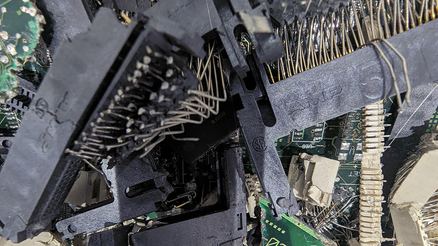
Black mass capacity is outrunning the batteries available to feed it
Announced lithium-ion pre-processing capacity now exceeds plausible North American end-of-life battery volumes for several years, leaving shredders competing for production scrap.
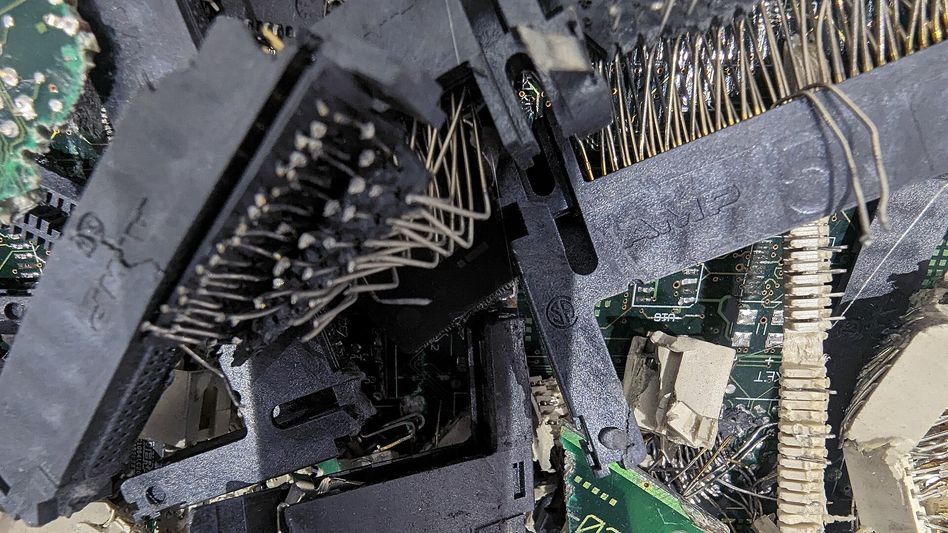
Lithium-ion pre-processing capacity announced across North America over the past four years substantially exceeds the volume of end-of-life batteries realistically available to feed it before the end of the decade, and operators are increasingly candid that production scrap is the only stream currently supporting utilisation.
The mismatch is arithmetic rather than opinion. Vehicle battery packs entering service today have expected service lives measured in the low teens of years, with second-life stationary applications extending that further for a meaningful share. The packs that will feed large-scale hydrometallurgical recovery are, for the most part, still in vehicles.
Production scrap is doing the work
Cell manufacturing generates scrap at every stage — electrode coating trim, formation failures, and cells that fail end-of-line testing. Early-stage gigafactory lines have historically produced double-digit scrap rates, and that material is chemically clean, compositionally known, and available in industrial volumes at a single location.
It is also the feedstock most likely to disappear. “Every cell plant’s engineering roadmap is a plan to stop generating our feedstock,” said Corinne Delacroix, commercial director at Volta Cell Recovery, which operates a shredding and pre-processing line in the upper Midwest. “A mature line runs scrap in the low single digits. We are being paid to help them put us out of a job.”
Consumer e-scrap is not the substitute
Several operators said they had examined consumer electronics batteries — laptop, power tool and mobility packs — as a supplementary stream and found the economics difficult. Collection is diffuse, pack chemistries and formats vary enormously, manual discharge and disassembly labour is significant, and the fire risk profile in transport and storage adds insurance and handling cost that industrial scrap does not carry.
“The nickel and cobalt units are there, but you are paying to aggregate them one drill battery at a time,” said Ottoline Serrano, an analyst at Kestrel Commodity Research. “That is a logistics business wearing a metallurgy business’s clothing.”
Downstream refining is the second bottleneck
Even where black mass is being produced, several pre-processors said domestic hydrometallurgical refining capacity to convert it into battery-grade nickel, cobalt and lithium salts remains limited, and that a meaningful share of North American black mass continues to be shipped for refining elsewhere. That reintroduces freight cost, classification complexity under waste shipment rules, and exposure to offshore payables terms.
What happens next
Operators contacted for this article broadly expected the same sequence: multi-year contracts for production scrap will concentrate among a handful of pre-processors with the best cell-plant relationships; independents without that access will run below nameplate or idle; and consolidation will remove some announced capacity before it is ever commissioned.
That is not a verdict on the long-run business. The end-of-life wave is a matter of physics and fleet age, and it will arrive. The question is which balance sheets survive the interval, and how much of the announced capacity is still standing when the feedstock finally shows up.