Battery fires are a design problem, not a housekeeping problem
Yards that have cut incident counts did it with infeed geometry, thermal detection and paid drop-off programmes — not with more signage and more toolbox talks.
The operators who have measurably reduced lithium-ion fire incidents share an unglamorous conclusion: the problem cannot be inspected away.
Lithium cells enter scrap and recycling streams inside consumer products that give no external indication of containing a battery. Disposable vapes, cordless tool packs, e-bike and scooter batteries, wireless earbuds, portable speakers, and an expanding list of low-cost electronics with embedded cells all arrive mixed into loads that operators have no practical means of screening item by item.
When a cell is punctured or crushed, thermal runaway can follow within seconds, and the resulting fire is self-oxidising, difficult to extinguish with water and capable of propagating through a pile.
What has actually worked
Infeed geometry. Several shredder operators have reworked the approach to the mill so that material passes across a defined, single-layer presentation before entering the hammer chamber, giving both operators and detection systems a chance at intervention. One processor rebuilt a feed conveyor specifically to slow and thin the burden at a single inspection point.
“You cannot see a battery in a four-foot pile moving at belt speed,” said Adele Furnish, safety director at Arbor Line Salvage. “You can sometimes see one in a six-inch layer. That is the whole intervention.”
Thermal detection with automatic response. Fixed thermal cameras over infeed and stockpile areas, tied to automated deluge or foam response, have shortened the interval between ignition and suppression from minutes to seconds at several sites. The critical design point is automation — detection that generates an alarm for a human to act on loses most of its value.
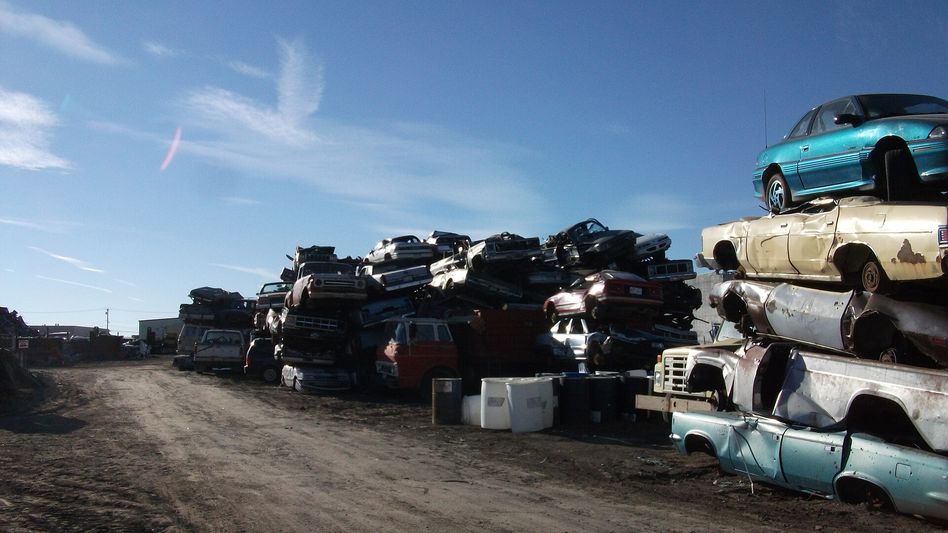
Pile management. Reduced stockpile height, wider separation between piles, and defined equipment access lanes limit propagation and give operators room to pull burning material out rather than fight it in place. This is the cheapest intervention available and the one most frequently traded away for yard capacity.
Paid drop-off programmes. The most effective upstream measure has been paying for batteries to arrive separately. Yards that have posted a per-unit price for e-bike and power-tool packs, and taken vapes free of charge, report a measurable diversion out of the mixed stream.
“We spent four years telling people not to put batteries in the load. Then we paid them not to, and it worked in a month.”
What has not worked
Signage and awareness campaigns aimed at the general public produced no measurable change at any of the sites contacted. Operators described them as necessary for documentation and useless for prevention.
Toolbox talks and operator training improve response quality once a fire has started, which matters, but do not reduce incident frequency. Every operator interviewed made this distinction unprompted.
Insurance-driven compliance checklists were described as a floor rather than a programme. Two operators said they had passed inspections shortly before significant fires.
The cost conversation
Thermal detection with automated suppression is a meaningful capital item, and the payback case rests entirely on avoided loss — which is difficult to argue until the loss occurs.
The operators who have funded it generally did so after an incident, or after their insurer made continued coverage conditional. Several noted that premium relief, where it was available, covered a useful fraction of the install cost, and recommended that operators open that conversation before specifying a system rather than after.