Shredded scrap holds flat as Midwest mills sit out July buy week
Obsolete intake fell sharply through a wet June, but muted mill bidding stopped the busheling premium widening past $90 a gross ton — a spread dealers had been counting on.
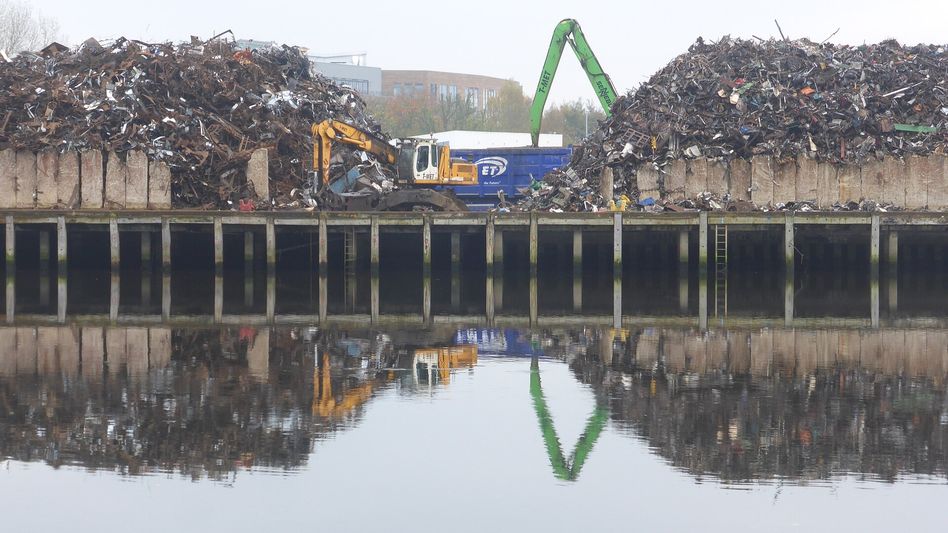
Shredded scrap settled sideways across the Midwest in July trading, holding near $402 a gross ton delivered Chicago-area consumers, despite dealer reports that obsolete intake ran 15 to 22 percent below June across the Great Lakes belt.
The disconnect surprised a market that had spent six weeks positioning for a $20 to $30 up move. Rain across the upper Midwest in June kept peddler traffic thin and stalled demolition jobs, and several regional processors said their shredder feedstock buffers were the smallest they had been since early 2024.
“We were down to eleven days of feed and I still could not get anyone to pay me up,” said Denise Arbogast, commercial director at Cormorant Iron & Metal, which operates two shredders in Indiana and Ohio. “The mills looked at their own yards, saw enough to run July, and just did not need the tonne.”
Order books, not inventories
Mill buyers describe the same picture from the other side. Long-product order books softened through the second quarter as non-residential construction bidding slowed, and several sheet producers took maintenance outages in July rather than push melt volume into a soft spot market.
Halloway Steel Mills, which runs three EAFs in the Ohio Valley, told suppliers it would take contract volumes at flat and buy spot only opportunistically. Raw-materials vice-president Ray Kolstad said the mill was managing a scrap position, not a shortage.
“There is a difference between scrap being scarce and scrap being needed. Right now it is scarce and not needed. That is the worst combination for a dealer, because you cannot monetise the tightness.”
The spread that did not widen
The more telling number sits in prime grades. No. 1 busheling traded at roughly $478 delivered, putting the premium to shredded at $76 a gross ton — up from $61 in April but well short of the $90-plus that several traders had modelled given thin manufacturing offal generation.
Prime scrap availability remains structurally constrained. Stamping and fabrication activity generates busheling and bundles as a byproduct of manufacturing, and lower automotive and appliance build rates cut that flow regardless of what obsolete grades do. That the premium stalled below $80 suggests mills are substituting more aggressively — leaning on pig iron, DRI and higher shredded charges to protect residual specifications rather than chasing prime units at any price.
Two Midwest processors said they had been asked to tighten copper and tin tolerances on shredded deliveries rather than supply more busheling, which points the same direction.
What August turns on
Dealers are watching three things. Whether the July mill outages return capacity in early August, which would pull spot demand forward. Whether obsolete flows recover with dry weather, which would relieve any tightness before it prices. And freight, where inland barge rates on the Ohio and Illinois river systems have begun climbing off a low-water base.
If flows recover before demand does, the market gives back its July flat and then some. Several traders are already quoting August offers with a $10 to $15 down bias, and at least one large regional processor has begun shipping shredded to export yards on the Gulf simply to avoid carrying it.