Film recovery economics improve, but only for clean back-of-store PE
Recyclers report firmer pricing for baled LDPE and LLDPE stretch film from distribution centres, while post-consumer store drop-off material remains a cost centre.
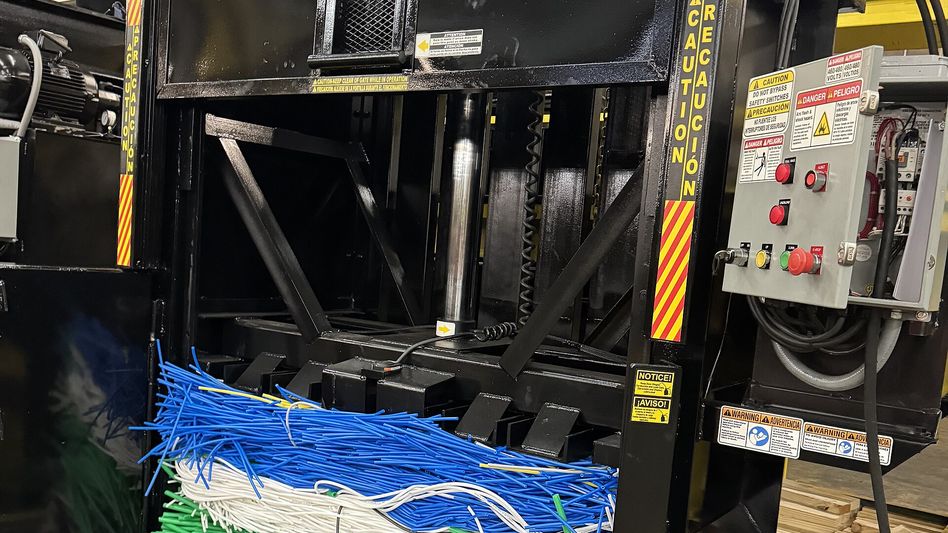
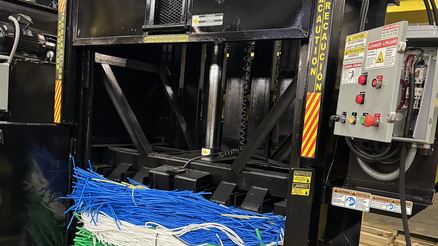
Baled A-grade clear stretch film out of distribution centres has firmed by 2 to 3 cents per pound in most regions since late May, processors said, supported by steady demand from pelletisers supplying trash-bag, agricultural film and pallet-wrap converters. Grade B natural and mixed-colour film has moved less, and post-consumer bag-and-wrap collected through retail drop-off programmes continues to trade at or below zero delivered.
The divergence is widening rather than narrowing.
Why commercial film holds value
Back-of-store and distribution-centre stretch film is effectively post-industrial material that happens to be collected through a commercial channel. It is single-resin, low-moisture, largely free of food residue, and generated in predictable weekly volumes at a known location. Pelletisers can run it with modest filtration and hit consistent melt-flow specifications.
“We will pay up for a clean DC programme all day because I know what comes off the line,” said Aurelio Banks, procurement director at Sable Ridge Polymers, which pelletises film at plants in Georgia and Texas. “It is the one part of the film book where I can quote a customer a spec and hold it.”
Consumer drop-off remains structurally hard
Retail drop-off film carries a different profile: mixed LDPE and LLDPE with HDPE bags, PP woven fragments, paper labels, adhesive, and moisture. Contamination rates of 15 to 25 percent are common, and the sorting labour required to bring it to a saleable grade generally exceeds the value recovered.
Several operators noted that the material also has a high volume-to-weight ratio, which makes freight a disproportionate share of delivered cost. A trailer of loosely baled film can gross out on cube well before it approaches weight, and the economics deteriorate quickly beyond a few hundred miles.
Recycled-content demand is not yet a rescue
Some converters are seeking post-consumer resin content for film applications, and pricing for verified PCR pellet has held a premium over virgin linear low. But the volumes being sought remain modest against total film generation, and most buyers specify a post-consumer designation that commercial stretch wrap does not always satisfy on a strict definition.
That leaves an awkward gap: the material buyers can most easily use is the material that is arguably not post-consumer, and the material that unambiguously is post-consumer is the material nobody wants to process.
Operators expect the gap to persist until either sorting technology closes the cost difference or a compliance regime prices the harder stream explicitly. Neither looks imminent this year.