Mixed paper quality is now a capital-planning problem for MRFs
Operators are adding fibre-side optical stages and revisiting screen configurations as mill specifications tighten faster than single-stream inbound composition improves.
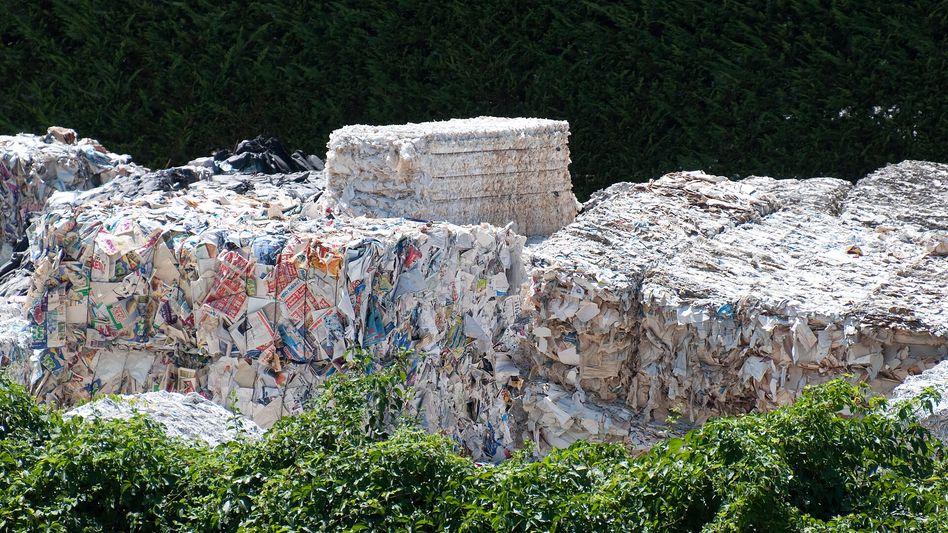
Materials recovery facility operators are increasingly treating mixed paper quality as a capital question rather than an operating one. Several told RecyclerWorld they have either commissioned or are scoping fibre-line upgrades specifically to hold mill specifications that have tightened over the past two years.
The driver is not price. Mixed paper continues to trade at a substantial discount to OCC and, in weaker regions, near breakeven against processing cost. The driver is rejection and downgrade risk.
The spec moved, the inbound did not
Single-stream inbound composition has continued its long drift: less newsprint and magazine stock, more corrugated from e-commerce, and a growing share of coated and laminated packaging that behaves badly in a repulper. At the same time, domestic mills that added recycled fibre capacity have specified tighter prohibitive limits than the export buyers who historically absorbed marginal tons.
“The grade definition on paper has not changed much, but the tolerance behind it has,” said Ines Marchetti, operations director at Corvid Materials, which runs three single-stream MRFs in the mid-Atlantic. “We used to argue about a load. Now we get a photograph and a deduction.”
What operators are actually buying
The most common retrofit described is an added optical sorting stage on the fibre line, positioned to pull residual plastics, coated board and remaining containers out of the mixed paper stream after screening. Operators cited two secondary priorities: replacing worn disc screens with configurations that handle a higher corrugated fraction without wrapping, and adding a small manual quality-control station immediately before the fibre baler.
Capital ranges quoted for a fibre-side optical addition clustered between $600,000 and $1.4 million installed, depending on whether existing conveyor geometry and building height can accommodate the unit without structural work. Two operators said the structural component was the larger surprise in their budget.
“Nobody’s payback model on this line item is built on selling mixed paper for more money,” said one Northeast operator. “It is built on not paying for rejected loads and not losing a mill relationship.”
The residue question follows immediately
Every operator who described a fibre-line upgrade also described a downstream consequence: more residue, and a disposal cost that scales with it. Pulling contamination out of mixed paper does not make it disappear; it relocates it to a stream with a tipping fee attached.
Two facilities said they are running the recovered fraction through a secondary sort to pull saleable containers back out, which improves the residue arithmetic but adds labour. A third said it had simply accepted the higher disposal line as the price of holding its mill contracts.
None of the operators contacted expected inbound composition to improve on its own. Several said the more realistic planning assumption is continued gradual degradation, and that equipment decisions made now should be sized for the stream three years out rather than the one on the tipping floor today.